
Supermarket Idle: Simulator
Apps Mobile GamesSimulation
4.4363.00 Reviews
- Version
- 1.02.14
- Installs
- 500.00K
- Age Rating
- Everyone
Screenshots
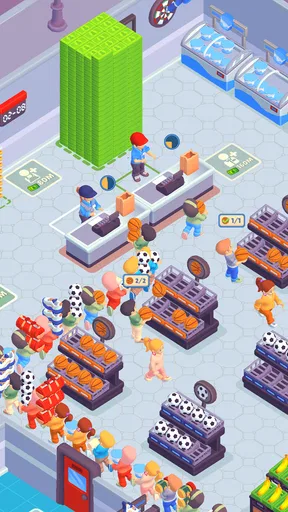
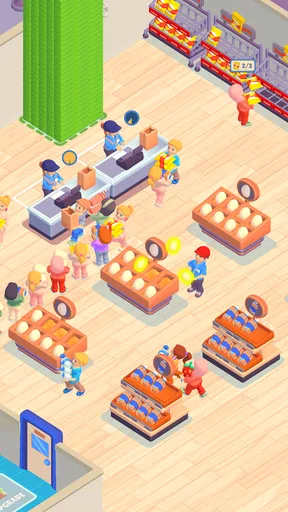
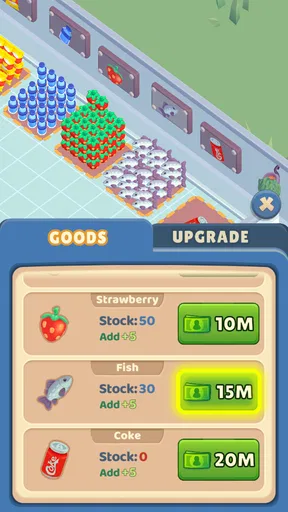
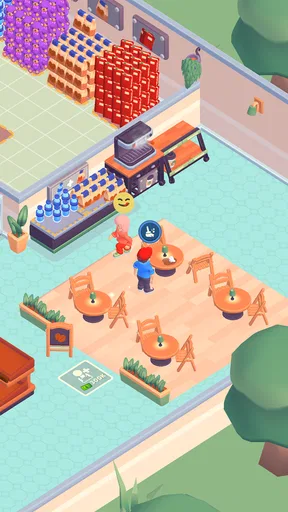
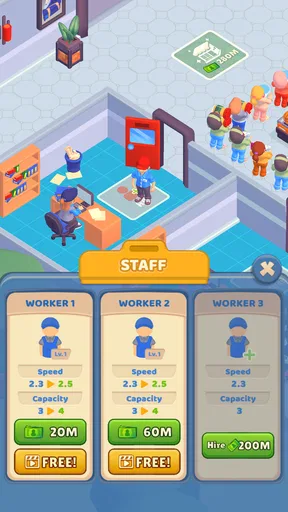

Our Review of Supermarket Idle: Simulator
 Analysis by Appyee
I spent time with Supermarket Idle: Simulator to see whether its supermarket-management idea offers more than a quick idle distraction. My first impression was easy to understand: the game puts me in the role of someone building and running a shop, then turns that simple premise into a steady loop of improvement. It belongs to the simulation category, is free to start, and is aimed at Everyone, so it is clearly designed to be approachable rather than demanding or niche.
What makes it worth discussing is not the basic idea of earning and upgrading. Many idle games do that. The more useful question is whether the supermarket setting gives those decisions enough meaning to keep me interested after the first session, and whether spending money feels necessary. My answer is mixed but generally positive: I found it pleasant for short, regular visits, while players looking for a deep retail-management simulation may find the experience lighter than the theme suggests.
A simple shop loop that is easy to understand
The central appeal is the sense of starting with a modest supermarket and gradually turning it into something much larger. I liked that the theme gives the usual idle progression a clear visual purpose. Instead of improving an abstract factory or a fantasy kingdom, I am working toward a busier, more successful store. That makes each improvement easier to understand, even when the underlying interaction remains straightforward.
The game is developed by Apps Mobile Games, and its presentation focuses on the accessible side of simulation. I did not need a long learning period to understand what I was supposed to do. The store summary describes the experience as working as a supermarket employee and manager while growing an idle shop, and that combination explains the rhythm well: there is a small amount of direct involvement, followed by progress that continues through the broader management loop.
That balance is useful for people who want a game they can check between other tasks. I can imagine opening it during a short break, making a few decisions, collecting progress, and leaving without feeling that I have abandoned a complicated operation. It also suits players who enjoy watching a small business become more capable over time but do not want to learn a large set of systems before seeing results.
How I approached the first sessions
I found the best way to play was not to treat every visit as a long session. The game works better when I give it a focused check-in: look at what has improved, decide where the next attention should go, and stop once the useful actions are finished. That approach keeps the growth feeling rewarding instead of turning the experience into repetitive tapping.
A realistic everyday use case would be someone checking the shop while waiting for a bus or taking a short lunch break. The supermarket theme makes that moment feel more coherent than a random collection of upgrade buttons. I can quickly reconnect with the goal, make progress, and return later. For a child or family member who enjoys management themes but needs something uncomplicated, the Everyone rating also makes the game easier to consider.
There is a trade-off, though. The same simplicity that makes the game welcoming can reduce the feeling of personal control. If you expect to plan staff schedules, negotiate supply costs, arrange detailed product categories, or respond to complex customer behavior, this is probably not the right kind of supermarket game. I would look toward a more detailed management simulator for that experience.
What free-to-play means here
The game is free, but it includes in-app purchases ranging from $1.99 to $99.99 per item. That is the most important spending context to understand before starting. A free download lowers the barrier to trying it, but the presence of paid items means I would approach the progression with a clear personal limit rather than assuming every player will have the same experience.
I did not find it useful to judge the purchase model only by the existence of optional payments. In an idle game, the real issue is whether the basic loop remains satisfying when I choose not to spend. For me, the sensible test is to play the early progression without treating paid acceleration as part of the normal routine. If the shop still feels enjoyable while I wait and make ordinary improvements, the free route has value. If progress starts to feel like a delay that exists mainly to encourage payment, the appeal will weaken quickly.
My practical advice is to decide in advance what kind of player you are. If you enjoy gradual growth, leave the purchase options alone and treat waiting as part of the design. If you dislike timers, repeated collection, or any suggestion that progress can be accelerated with money, this format may become irritating even if the supermarket theme appeals to you. Parents should also remember that an Everyone rating describes content suitability, not a guarantee that every purchase situation will feel comfortable for every household.
The fairest way to judge the game is by its free progression, not by how quickly paid options can move it forward. That distinction matters because a large purchase range can make a game feel very different to two people: one may enjoy a relaxed idle routine, while another may feel pressure to reduce waiting. I would not spend simply because the game presents a faster route. I would only consider a purchase if the unpaid loop already felt enjoyable and the cost matched my own limit.
Where progress feels enjoyable and where pressure can appear
The strongest part of the progression is the visible idea of improvement. A supermarket is an intuitive setting for growth: a small operation can become more active, more capable, and more profitable. Even without turning the game into a business textbook, that context helps me understand why I am returning. I am not just increasing a number; I am trying to make the shop feel more successful.
The weaker side is the possibility of routine. Idle design depends on repeated returns, and repetition can either feel calming or empty depending on what the player expects. I enjoyed the loop most when I treated it as a background game rather than my main gaming activity. When I wanted a session with several meaningful decisions, the lighter structure became more noticeable.
One useful habit is to avoid spending every reward immediately. I prefer to pause and consider which improvement best supports the next stage of the shop rather than automatically selecting the first available option. This creates a small planning layer, even in a relatively accessible game. It also helps reveal whether I am making choices because they are strategically useful or simply because the interface makes them available.
Another tip is to use short sessions to observe the rhythm before deciding whether the game deserves long-term attention. An idle simulator can seem exciting during the first burst of upgrades, then feel less engaging once the novelty fades. By checking how I feel after several brief visits, I get a better sense of whether the supermarket concept genuinely holds my interest or whether I only enjoyed the initial growth.
Is the progression competitive or mainly personal?
I would not approach this as a game where fairness depends on defeating other players through equal competitive conditions. Its appeal is more personal: improving my own shop and watching the business grow. That makes the purchase question somewhat different from a competitive multiplayer game. The concern is less about someone buying an advantage over me and more about whether paid acceleration changes the satisfaction of my own progress.
For players who enjoy comparing themselves with friends, the important thing is to keep expectations realistic. A player who spends may move through available progress differently from someone who does not. That does not automatically make the experience unfair in a direct competitive sense, but it can affect how people interpret achievements or compare development speed. I would enjoy this game more as a private management project than as a serious contest.
This is also where the supermarket theme helps and limits the experience. It gives progress a recognizable purpose, but it does not automatically create a deep economy. If your idea of fairness involves carefully balanced markets, transparent production chains, or skill-based competition, a more systems-heavy simulation would be a better match. Here, the satisfying question is whether my shop is developing at a pace I find enjoyable.
What I would check before committing money
I would pay attention to how the game feels during ordinary, unpaid play. Are the available decisions interesting enough when I am not trying to rush? Does returning later feel rewarding, or does it feel like collecting a delayed obligation? Do improvements make the shop feel meaningfully different to me, or do they mainly produce larger values? These questions are more useful than focusing on the biggest possible purchase.
I would also keep an eye on the current version, which is 1.02.14, because a game can change as it develops. That does not tell me by itself whether the purchase model is generous or restrictive, but it is a useful reminder to judge the experience I am actually playing rather than relying on assumptions about how idle games usually work. I would review the in-game wording carefully before confirming any transaction.
There are also practical questions a cautious player may have about long-term value. Will the game remain enjoyable after the early upgrades? Does the store continue to feel like a place I am managing, or does it become a sequence of routine claims? How much patience am I willing to bring to the free route? I cannot answer those questions for everyone, but my experience suggests that the game is best for people who already like gradual, low-pressure progression.
How it compares with other simulation choices
Compared with a traditional tycoon game, this is the lighter option. A classic management title usually asks me to think about several connected systems at once, such as pricing, staffing, stock, customer satisfaction, and expansion. Supermarket Idle: Simulator is more approachable because it centers the pleasure of growth and repeated improvement rather than demanding that I run a detailed retail operation.
Compared with a purely passive idle game, the supermarket setting gives the progress more personality. I have a clearer mental picture of what the numbers represent, and that can make routine check-ins feel less abstract. The trade-off is that players who want constant action may find the idle structure too slow, while players who want a full business simulation may find it too simple.
It also differs from competitive economy games because I would not choose it primarily for rivalry. The experience is better suited to someone who wants a personal project that can grow in the background. If your favorite part of management games is optimizing every small variable, another option will likely offer more depth. If your favorite part is seeing a modest operation become impressive without a steep learning curve, this one has a clearer case.
Who should try it, and who should skip it
I would recommend giving it a try if you enjoy idle games, friendly business themes, and short sessions. It is especially suitable for players who like checking progress several times during the day rather than sitting down for a long, demanding campaign. The free entry makes it easy to test that rhythm for yourself, and the Everyone rating broadens its potential audience.
I would be more cautious about recommending it to players who strongly dislike in-app purchases, even when they can choose not to use them. The listed purchase range is wide enough that spending expectations may be an important part of your decision. I would also skip it if you want a detailed supermarket simulator with complex logistics, because the accessible idle structure is likely to feel too limited.
It may not be ideal for someone seeking a competitive game with carefully equalized progression. Since spending can be part of the overall environment, I would not use it as a serious test of management skill against other people. I would choose it for relaxation, gradual development, and the satisfaction of returning to a shop that has moved forward since the last visit.
What the numbers say about its audience
The game has an average rating of 4.4 from around 15 thousand ratings, with over 500 thousand installs and 363 written reviews. Those figures suggest that many people have found the concept appealing enough to try and rate, while the written reviews offer a smaller but useful layer of player feedback. I see that as encouraging, but not as a substitute for deciding whether the idle format fits my own preferences.
The release date is January 8, 2026, so I would keep the relatively recent arrival in mind when judging its place among supermarket and tycoon games. A newer title can still be finding its identity, and the current experience may develop over time. That makes it sensible to focus on the present play loop and spending comfort rather than assuming it already matches the depth of long-established management games.
The minimum operating-system requirement is version 12, which is relevant if you are installing it on an older device. For compatible Android or iOS users, the more important question is probably not access but tolerance for idle pacing. I would check device compatibility before downloading, then spend enough time with the unpaid loop to see whether the game earns a regular place on my home screen.
My trust verdict on the purchase experience
I appreciate that the purchase information is clear enough to establish the basic boundary: the game is free to start, but optional items can cost from $1.99 up to $99.99. I would not describe that alone as proof of an unfair system, and I would not promise that every player will experience the same level of pressure. The honest conclusion is narrower: spending is part of the product, so a careful player should treat the free route as a deliberate choice rather than an accidental default.
My own trust test is simple. I would play without paying first, decide whether the shop remains enjoyable at its natural pace, and avoid making a purchase to solve impatience. If I ever chose to spend, I would set a firm budget and confirm exactly what the item does before proceeding. That approach protects the relaxing quality that attracted me to the game in the first place.
Final experience after weighing the trade-offs
After looking at the theme, progression, audience, and spending model together, I see Supermarket Idle: Simulator as a comfortable casual simulation rather than a deep retail-management challenge. I like the supermarket setting because it gives idle growth a familiar shape, and I think the game works well in short visits. Its main weakness is the same feature that makes it accessible: players wanting layered strategy or constant interaction may outgrow it quickly.
I would recommend trying it if you want a free, easy-to-follow shop-building game and are comfortable treating progress as gradual. I would not recommend spending immediately, and I would not choose it over a full tycoon simulator if detailed decisions are what keep you engaged. For the right player, it is a pleasant background game with a clear goal. For everyone else, the free download makes a brief test reasonable, but the purchase range and lighter management depth deserve a careful look before it becomes a regular habit.
Verdict
Strengths of Supermarket Idle: Simulator
- Simple controls make it easy for beginners to start playing.
- Store expansion gives you clear short-term goals to work toward.
- Offline progress lets the supermarket keep earning while you are away.
- Bright visuals and clean menus make the game pleasant to navigate.
- Frequent upgrades provide a steady sense of progression.
Limitations of Supermarket Idle: Simulator
- Progress can become repetitive once the basic store layout is established.
- Some upgrades may require long waits or repeated actions to unlock.
- The simulator offers limited interaction with individual customers.
- Ads may interrupt the experience or be needed for extra rewards.
- Long-term gameplay may feel shallow for players seeking deeper management.
Other Releases by Apps Mobile Games
View All
Fashion Battle - Dress up game
Role Playing4.4

Drill & Collect: idle mine dig
Simulation4.2
Similar Picks in This Category
View All
Truckers of Europe 3
Wanda Software4.3

Town Building Life Simulator
XGame Global4.2

Fidget Toys Trading・Pop It 3D
Freeplay Inc4.7

Sculpt People
CrazyLabs LTD4.4

Scary Teacher 3D
Z & K Games4.2

Hair Tattoo: Barber Shop Game
CASUAL AZUR GAMES4.3
Frequently Asked Questions
What is Supermarket Idle: Simulator?
Supermarket Idle: Simulator is a casual management game in which you build, organize, and expand your own virtual supermarket. You typically begin with a small store and gradually improve it by adding shelves, stocking products, serving customers, and unlocking new areas. Its idle mechanics allow the business to continue generating progress and income even when you are not actively playing.
How do you play Supermarket Idle: Simulator?
The main gameplay focuses on managing supermarket operations and reinvesting your earnings. You can arrange merchandise, upgrade shelves and facilities, improve customer service, and expand the store as your profits increase. The controls are generally simple and designed for short sessions, making the game accessible to casual players. Progress comes from balancing upgrades with the growing demands of your customers.
Does Supermarket Idle: Simulator require an internet connection?
The game may allow some basic management and progression while offline, but certain features can depend on an internet connection. Advertising rewards, cloud synchronization, updates, special events, or other online services may not work without access to the internet. If you want the most complete experience, it is best to launch the game online occasionally and check the developer’s current store listing for exact requirements.
Is Supermarket Idle: Simulator free to download and play?
Supermarket Idle: Simulator is generally offered as a free download, allowing players to start managing their store without paying upfront. However, free-to-play games commonly include optional advertisements and in-app purchases. These may provide extra currency, speed up construction, or offer additional rewards. You can usually progress without spending money, although doing so may require more patience and regular gameplay.
Is Supermarket Idle: Simulator suitable for children?
The game is usually easy to understand because it relies on simple tapping, upgrading, and store-management mechanics rather than complex controls. Nevertheless, parents should review the age rating, advertising content, and available in-app purchases before allowing children to play. If the game offers purchases or rewarded ads, parental controls are recommended to prevent accidental transactions and limit exposure to promotional content.
Play our best games!


